Order Now

Build a Supplemental Power Project With the Energy Revolution System

A step-by-step blueprint and video guide for constructing a small, coil-based device that can offload low-draw appliances from the grid. No subscription. No shipped hardware. Just a project you build yourself, for about $65–$100 in parts.

  • Your electric bill climbs every year, and the utility company is not offering you a vote.
  • You have looked at solar, gotten a quote, and closed the tab when you saw the number.
  • You want some measure of energy independence—or at least a backup for the essentials when the grid goes down.
  • You have tried “energy-saving” gadgets that did nothing except light up an LED and collect dust.
✓ $39 One-Time ✓ 60-Day Guarantee ✓ PDF + Video Guide ✓ Build It Yourself
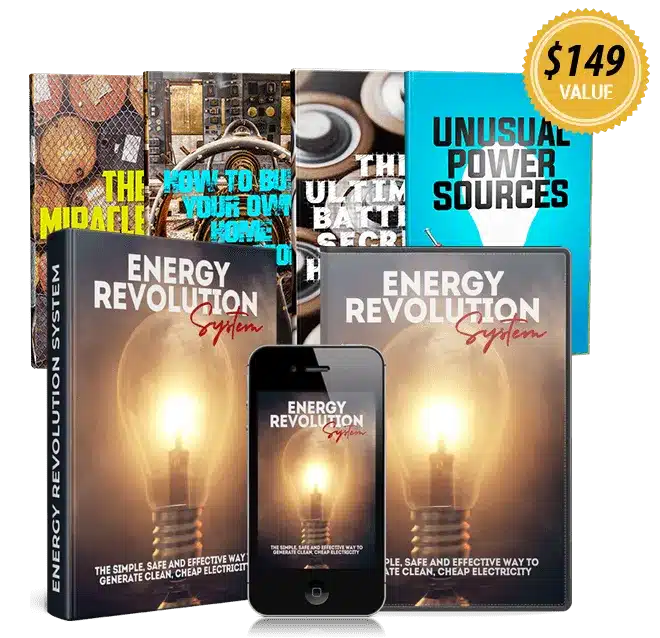
Energy Revolution System Blueprint
Coil Assembly Diagram Placeholder

Why “Just Pay the Bill” Is Not a Plan

Energy costs do not announce themselves with drama. They show up in small, quiet line items that you learn to accept—until the acceptance becomes its own kind of frustration.

  • ⚡
    The bill that only goes one direction.

    You have cut back on heating, switched to LEDs, unplugged the spare fridge—and the number still creeps up.

  • ☀️
    The solar quote that ended the conversation.

    You looked into panels, got a number with five digits, and quietly decided it was not for you.

  • 🔌
    The outage that reminded you how exposed you are.

    A storm knocked out power, and you realized your router, your phone, and your fridge—all depend on a grid you do not control.

  • 😔
    The quiet sense that the system is rigged.

    Rates go up, incentives favor installers, and the average homeowner is left holding the bill.

Meet the Energy Revolution System

The Energy Revolution System is a digital DIY guide, not a physical generator. When you purchase it, you receive access to a members area containing a main PDF blueprint, a parts and materials list, high-definition video tutorials for the tricky parts (coil winding, magnet alignment), and troubleshooting guidance.

The project itself is a coil-based electrical circuit inspired by Nikola Tesla’s bifilar coil patent. What the guide teaches you to build is an experimental circuit that can supplement power for small devices.

What it can realistically power: LED lighting, a modem or router, phone chargers, a small fan, security cameras—constant, low-draw loads.

What it cannot power: Central air conditioning, electric water heaters, large ovens, refrigerators, or an entire home. Realistic independent reviews put savings at 20–40% on targeted small loads.

What it is not: It is not a plug-and-play generator. It is not free energy. The vendor’s own fine print says the product “is an experiment, it was not technically assessed.”

What You Actually Get

The Energy Revolution System delivers a structured project, not a finished product. Here is what is inside the digital members area.

The Main PDF Blueprint

Step-by-step written instructions covering material gathering, component preparation, and final assembly. The updates prioritize visual clarity, with diagrams showing component placement and wiring.

Parts & Materials List

An itemized checklist of affordable components—magnets, insulated copper wire, simple housing materials, a rotor shaft—with guidance on sourcing them locally. Total material cost is roughly $50–$100.

HD Video Tutorials

The most valuable part of the package. Coil winding and magnet alignment require precision, and the videos walk through both visually. Reviewers rate the build difficulty at a 6 out of 10.

Troubleshooting & Optimization

Guidance on common issues—low output, failure to start, unstable power—and how to correct them. The most frequent build error is slight misalignment of the magnetic components.

What the Evidence Actually Supports—and What It Does Not

Most DIY energy guides skip this section. This one will not, because electricity is not a category where you want to be misled.

What the System Does NOT Do:

  • It does not create free energy. A coil cannot produce more energy than goes into it. That is conservation of energy.
  • It does not eliminate your power bill. The “80% savings” headline is marketing. Realistic estimates are 20–40% on small, targeted loads.
  • It has not been technically assessed. The vendor’s own terms state: “The product is an experiment, it was not technically assessed.”
  • It does not include hardware. The $39 price covers the digital guide only. You buy the magnets, wire, and tools separately.

What It May Reasonably Do:

  • Teach you how a coil-based circuit works through hands-on assembly.
  • Provide a small, steady supplemental power source for low-draw devices.
  • Reduce grid usage modestly for constant loads like routers, chargers, and LED lighting.
  • Serve as an educational project for someone interested in electronics and energy fundamentals, backed by a real 60-day refund window.

How the Project Unfolds

This is not a supplement you swallow or a box you plug in. It is a build. Here is what the process actually looks like from day one.

1. Days 1–2: Sourcing and Prep

You download the guide, review the parts list, and source materials locally (hardware-store accessible: copper wire, magnets). Expect to spend a few hours shopping and gathering.

2. Days 3–7: The Build

Frame assembly and magnet placement are straightforward. Coil winding is the critical step—it requires patience and precision. Total assembly time ranges from 4 hours to a full weekend.

3. Week 2: Testing and Tuning

You connect the device, measure output, and troubleshoot. Misalignment of magnetic components is the most common cause of unstable output.

4. Weeks 3–4: The Honest Check-In

You should have a functioning device. If it is not producing usable output and you cannot troubleshoot it, the 60-day refund window is open.

What People Say About the Build

A note on reviews: The vendor’s own disclaimers make clear that results vary and the story is promotional. The themes below are drawn from independent review roundups and user reports—not audited statistics. Treat them as directional.

"The videos were excellent; I learned more about electromagnetism building this than in high school."

— Theme: Strong educational value

"It works, but I can only power my shed lights and freezer. It didn’t handle my AC unit."

— Theme: Realistic ceiling on output

"I thought I could just plug it in and become completely off-grid. It’s too much work."

— Theme: Expectation mismatch (DIY build required)

Start Your Build With the Energy Revolution System

⚠️

This is a digital product. No hardware ships. You source materials separately (est. $65–$100). The vendor states the device is an experiment and has not been technically assessed.

Digital Blueprint Access

$149$39
one-time payment
  • Main PDF blueprint with instructions
  • Parts and materials list with sourcing guidance
  • High-definition video tutorials
  • Troubleshooting & optimization module
  • Bonus energy-saving guides
  • 60-day money-back guarantee (ClickBank)

Optional upsells (OTOs) may appear at checkout. You do not need them to build the core project.

🔒 Secure checkout · Instant digital delivery · No forced subscription

60-DAY
MONEY-BACK
GUARANTEE

The 60-Day Money-Back Promise

Plenty of DIY guides overpromise and let buyers down. The Energy Revolution System is backed by a 60-day refund window through ClickBank, which is the main reason the financial risk is low.

  • You have 60 days from purchase to request a refund.
  • ClickBank enforces the guarantee as the retailer.
  • The refund covers the purchase price of the digital guide.

Note: The guarantee is a financial safety net for the guide. It does not guarantee specific power output, and it does not cover the cost of hardware materials you purchased for the build.

Straight Talk (FAQ)

What is the Energy Revolution System?

A $39 digital DIY guide for building a small, coil-based supplemental power device, with a PDF blueprint, parts list, and video tutorials.

Is it a physical product?

No. You receive digital access only. You source and purchase hardware materials separately.

What is the realistic material cost?

Independent reviewers estimate $65–$100, depending on what you already own in your toolbox.

Does it really save 80% on bills?

No. Realistic estimates are 20–40% on targeted small loads, not a full bill. It cannot power a whole house, AC unit, or large appliances.

Has the device been tested?

The vendor states the product “is an experiment, it was not technically assessed.”

Is it safe?

Electrical work carries risks. If you are not comfortable with basic wiring and soldering, do not attempt it. Check local regulations before any home electrical alteration.